
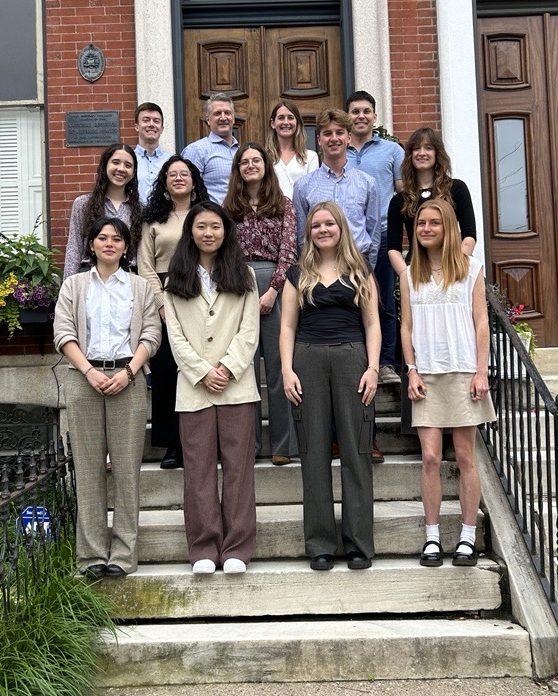
EHS Support’s 2025 Summer Internship Program kicked off on June 9 with a talented, multi-disciplinary team of students from science and engineering backgrounds with varying knowledge in hydrogeology, ecology, chemistry, engineering, and data science/geographic information systems. The 10-week assignment (June 9 to August 15) is focused on a regional-scale assessment of multiple major urban waterways in the United States, combining scientific exploration, collaboration, and a passion for environmental stewardship.
Internship Project Assignment
The Project Assignment entails a multidisciplinary, regional-scale assessment of multiple major urban waterways in the United States. Land-use changes and urban revitalization are placing a greater focus on the opportunities that these areas can provide to society and ecological functions. The primary objective of the regional-scale waterway assessment is to define the potential sources and pathways of chemical and physical stressors to these urban waterways that may be impacting human health and ecological receptors. The work will determine the state of knowledge regarding historical and current environmental conditions within each waterway and its surrounding watershed and, in the context of future urban planning/development, predict the future societal demands. The findings of the assessment will be used to define the scope of future investigations and potential management/development options to support future remediation and restoration of ecological and societal functions.
The project team will leverage historical data and reports prepared by industry and government agencies, current and historical infrastructure information, peer-reviewed literature studies, and high-resolution imagery to identify the potential contributions to and impacts on each waterway. Analytical data and spatial information to support the assessment will be integrated into a comprehensive geospatial database for each watershed to facilitate analyses at spatial scales ranging from individual sites to watershed-level assessments. As part of the analysis, preliminary conceptualization of linkages between sites and impacts to the target waterways will be developed. Team members will have the opportunity to explore forensic and statistical analysis techniques to further correlate the linkages between sites and waterway impacts.


