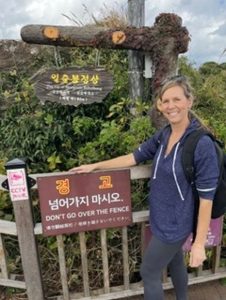
 Melissa Beauchemin is an environmental scientist with 25 years of experience conducting ecological risk assessments (ERAs) on behalf of government agencies, potentially responsible parties, and industrial clients in the railroad, paper, pharmaceutical, chemical, real estate, mining, and petroleum markets. She specializes in preparing technical documents for complex sites, ranging from small upland, local habitats to large river systems and broad-scale offshore assessments. Nationally, she has worked on projects at Department of Defense sites, National Parks, and Superfund sites. Internationally, she has worked on projects in Canada, the UK, Norway, and Australia. She brings extensive expertise and knowledge of unique compounds, such as per- and polyfluoroalkyl substances (PFAS), neonicotinoid pesticides, and explosives, as well as traditional contaminants, including polychlorinated biphenyls, heavy metals, dioxins/furans, and petroleum compounds, and the associated ecotoxicity and thresholds available for use in risk assessments.
Melissa’s skills include conducting screening-level and baseline quantitative terrestrial and aquatic risk assessments, implementing food web modeling, developing site-specific assessment criteria, identifying remedial action objectives, and calculating preliminary remediation goals to support risk management strategies. She is experienced in all aspects of the ERA process, from sampling design and fieldwork to data management and evaluation. As Principal Investigator in an aquatic toxicology laboratory, she led acute and chronic toxicity studies with fish and invertebrates and is well-versed in sampling and analytical procedures for water, sediment, and biota. She also assists clients with sediment characterization for dredged material disposal and permitting. With her extensive experience representing clients involved with high-profile, litigious environmental issues, she has a proven history of assisting clients achieve their environmental goals in a strategic and cost-efficient manner.
What do you find most rewarding about the work that you do?
Every project, client, and regulatory regime bring new, exciting challenges so day-to-day work is always different. I am passionate about generating measurable impacts to projects, where the effort spent evaluating scientific data results in actions that help our clients and have a positive impact on the environment. I enjoy the interdisciplinary nature of ERAs, which blends principles of biology, ecology, toxicology, chemistry, statistics, geology, and hydrology.
What are you currently working on?
I am currently working on several ERAs for multiple clients in different areas of the country and in Australia. The projects are highly diverse and address a wide range of contaminants and environmental challenges. Projects include two ERAs focused on PFAS, with one involving the development of site-specific assessment criteria; an ERA evaluating groundwater-to-surface-water metal discharges; and an ERA for a Superfund site along an industrial river with multiple contaminant sources. I also serve as an independent reviewer of an ERA that uses population modeling to evaluate lead impacts on two bird species. In addition, I am leading an ERA and supporting cleanup goal development and remedial activities at a former explosives manufacturing facility in a desert environment.
How can our clients benefit from this service/particular innovation?
Remedial goals and actions are expensive and therefore should always be risk-based and site-specific. Conducting a site-specific ERA is essential for developing risk-based cleanup goals that focus remediation efforts, reduce the extent of corrective actions, and avoid unnecessary costs.
What is a little-known fact about you? (i.e., hobby, accomplishment, talent, etc.)
Outside of work, I enjoy skiing, running, and traveling.