
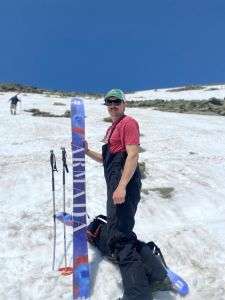
Austin Wilkes is an environmental scientist with experience working on a variety of water quality and contaminated sediment issues. His work at EHS Support is focused on water quality compliance, ecological criteria derivation, environmental forensics, and ecological risk assessments under US, Australian, UK, and Canadian regulatory settings. His specific areas of expertise include sediment-surface water interactions and implications for pollutant mobility and automating data handling processes using R to streamline reporting and monitoring for his clients.
Austin serves as the technical lead on two internal strategic growth projects – one focused on the ecotoxicity of boron and the other focused on urban waterways and emerging Superfund sites. His work on the boron strategic growth project seeks to address scientific uncertainty in the regulatory sphere surrounding appropriate water quality standards for boron, which has implications for the oil and gas and wood treating industries. Austin’s work on the urban waterways strategic growth project is focused on becoming the recognized expert on a large, recently listed, NPL site in an effort to better position prospective clients as they navigate the multi-party Superfund process. To support these efforts, he has been leading a growing team of individuals focused on supporting the compilation of a large sediment database, document repository, and conceptual understanding related to the NPL site.
What do you find most rewarding about the work that you do?
I enjoy working on challenging problems and creating implementable solutions. The Water Quality Compliance team works on a variety of environmental issues, but there is almost never a one-size-fits-all solution. Effectively defining problems in order to craft creative solutions is what I find most rewarding about this work.
What are you currently working on?
I am working on a few different projects that aim to derive site-specific screening criteria for boron, selenium, and fluoride at sites in the United States and Australia. These efforts will lead to the development of improved thresholds for understanding ecological risk at these sites based on geochemical factors that influence the bioavailability of these elements.
For the past three years, I have also been working on leading our business development efforts to become technical experts on the Lower Hackensack River, which is a large, recently listed Superfund site in northern New Jersey. To support these efforts, I designed a summer internship program with a curriculum that enabled teams of interns to process large amounts of publicly available information about the Lower Hackensack River while providing them with valuable experience and learning opportunities along the way.
We just wrapped up our third summer of the 10-week internship program and have now had 19 interns successfully complete the program since 2022. Supporting this program and the progression of early career scientists has been a very rewarding experience for me.
How can our clients benefit from this service/particular innovation?
When we’re deriving site-specific screening criteria for a site, it’s usually because the existing criteria is based on outdated information or absent entirely. The criteria derivation process benefits our clients by providing them with scientifically defensible targets that allow them to make informed decisions about how to manage their sites.
For waterways like the Lower Hackensack River, our clients can benefit from our early understanding of these systems, which uniquely positions us to make recommendations on how to proceed through the Superfund process. In the long-term, they may also reap the benefits of working with some of the high-caliber future environmental professionals who we’ve hired through our internship program.
What is a little-known fact about you?
I have climbed all 115 of the 4,000+-foot mountains in New York, Vermont, New Hampshire, and Maine.


